
Lawrence County Release Dates Explained
A projected date is an estimate based on the sentence and facts known at the time. An actual release date is the day the custodian ends physical confinement. Those dates can differ. For a Pennsylvania state sentence, the minimum is usually the first point at which parole may become lawful. It is not an appointment at the prison gate. The maximum is the sentence's outer date after valid calculation, but later legal events can still require a new calculation.
Lawrence County court records may show a sentence, bail order, or parole action before the person leaves the Lawrence County Corrections Center. Processing, another warrant, a detainer, or transfer can keep the person in custody. A pretrial detainee has no sentence-based projected date at all. That person's next step depends on bail, case action, and every active hold.
Use date-and-agency language when confirming the event. A sound statement identifies release from a named jail or prison on a given date, based on that agency's discharge record. It does not claim that the person is free from all custody or supervision.
Find a Lawrence County Projected Date
The right path turns on whether the sentence is a Lawrence County sentence or a Pennsylvania state sentence. The Unified Judicial System case portal supplies the starting docket. It can show the charge, sentence, commitment, later parole proceedings, and revocation activity. The signed order from the Lawrence County Clerk of Courts carries more authority than a short docket label.
- Identify every case. Search the participant name in Lawrence County criminal Common Pleas and Magisterial District Judge records. Check case numbers and dates so two people with the same name are not combined.
- Read each sentencing order. Record the minimum and maximum, custody-credit terms, and whether terms run at the same time or one after another.
- Determine the custodian. A local sentence requires Lawrence County court and jail records. A state commitment requires a PADOC calculation and any Pennsylvania Parole Board action.
- Ask for the official calculation. Request the sentence calculation, release information, or discharge entry from the agency that holds the person. Include the inmate or case number when known.
- Check later events. Review detainers, new cases, Board decisions, misconduct effects within an applicable program, and recommitment before treating any date as current.
The county's main Lawrence County released-inmate search and record path helps identify the custody layer when it is not yet clear. A current locator result is useful, but the sentencing record and agency calculation resolve the date.
Note: A court docket explains legal authority, while the jail or DOC discharge entry records the actual end of physical custody.
Lawrence County State Release Lookup
The Pennsylvania Department of Corrections locator separates current inmates from Department Supervised Individuals. Search the Inmate tab for someone still in a state correctional institution. Search the supervised-person tab after physical release on state parole. Name, inmate or parole number, birth date, committing county, and location can help distinguish a Lawrence County commitment from another person.
The key limit is easy to miss. The public locator does not display fields called projected release date, tentative release date, minimum date, or maximum date. A supervised-person detail may show a Release Date, but that is a past physical release into supervision. It must never be relabeled as a future projection or sentence-completion date.
The official PADOC locator screen shows the separate custody and supervision paths. See the state inmate and supervised-individual search before reviewing the captured interface.
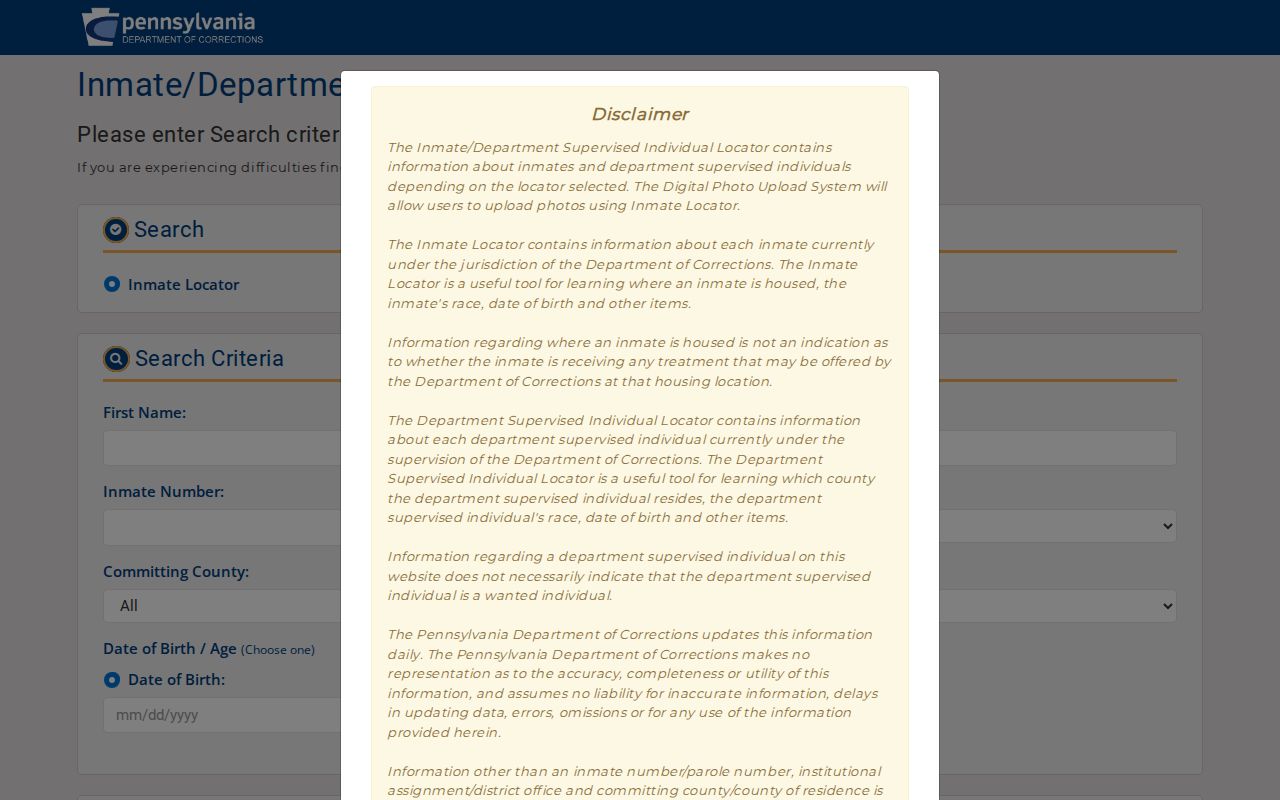
Its search categories help identify present jurisdiction, but neither category supplies Lawrence County's future release calculation.
Lawrence County Release Minimums and Maximums
Pennsylvania generally uses an indeterminate state sentence with minimum and maximum terms under 42 Pa.C.S. § 9756. PADOC calculates the dates. The minimum marks eligibility for parole review in an ordinary case. The maximum is the sentence's outer limit, subject to lawful aggregation, credit, and later recalculation. Neither date by itself is a promised Lawrence County release.
Parole needs more than the passage of time. The Pennsylvania Parole Board considers the case, and release can depend on a grant, an approved plan, stated conditions, and completed processing. The Board may refuse parole and set later review. A review month after a violation or recommitment is also not a release date.
- Minimum date
- The first ordinary parole-eligibility point, not a guaranteed exit date.
- Maximum date
- The calculated outer sentence date, subject to valid changes in credit or recommitment.
- Board action
- The individual Pennsylvania Parole Board decision that grants, refuses, or addresses parole status.
- Detainer
- A hold or request from another authority that can prevent community release.
Lawrence County RRRI Release Rules
Pennsylvania has no universal day-for-day good-time rule that lets a reader subtract a fixed amount from a state sentence. The relevant incentive described in the Lawrence County research is the Recidivism Risk Reduction Incentive, or RRRI. Eligibility is determined in the sentence, and the program creates a reduced minimum for some eligible state offenders. It does not erase the maximum or compel release.
Under 61 Pa.C.S. § 4505, the RRRI minimum is three-fourths of the regular minimum when that minimum is three years or less. It is five-sixths when the regular minimum exceeds three years, with aggregation and rounding handled as the statute directs. PADOC certification, continuing eligibility, conduct, completion of the plan, a sound release plan, conditions, and a discretionary Board choice still matter.
The official PADOC RRRI explanation provides the program source shown below.
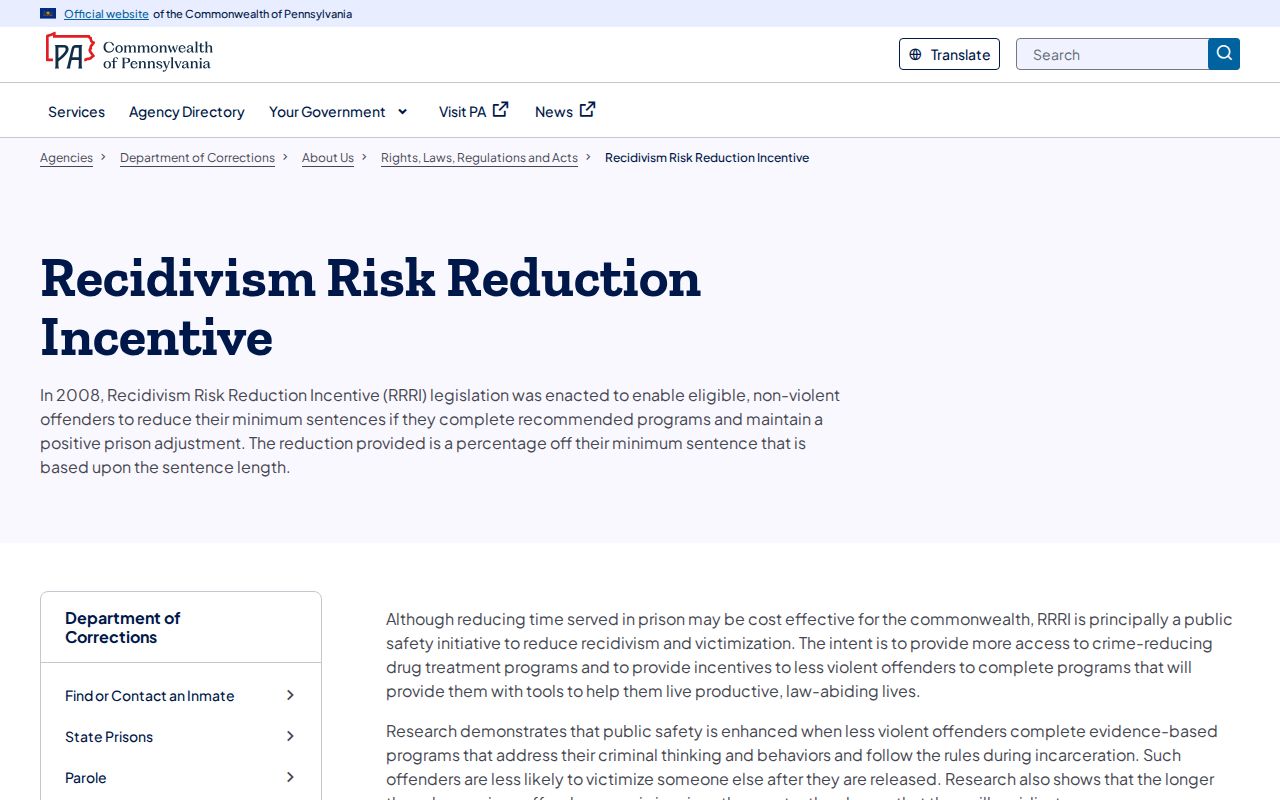
The program can change the first eligibility point for a qualifying case, but the screen cannot confirm that release will occur then.
No Lawrence County 85 Percent Rule
Pennsylvania expressly rejects the common claim that a state prisoner must serve 85 percent of the maximum before parole. That figure comes from different systems and should not be applied to a Lawrence County state sentence. The regular minimum controls ordinary eligibility, while an RRRI minimum may apply only when the court and statute make the person eligible.
The Pennsylvania parole process explains the minimum-date rule and why parole is discretionary. A minimum can arrive with no release if the Board refuses parole, the plan is not approved, another hold exists, or processing is incomplete. The same is true at an RRRI minimum. It is a point at which a release decision may occur, not a self-executing discharge.
This Lawrence County computation quirk prevents a serious error: multiplying a maximum by 85 percent cannot produce an official Pennsylvania release date. Obtain the PADOC sentence calculation and Board action instead.
Note: Pennsylvania's minimum date marks eligibility, while the custodial discharge entry marks the date a person actually leaves confinement.
Lawrence County Release Credit Calculations
Qualifying time already spent in custody affects both the minimum and maximum under 42 Pa.C.S. § 9760. The credit may include specified detention before trial, during trial, through sentencing, or during an appeal. The exact dates matter. Missing a start or end date can move a hand calculation and lead to a false Lawrence County projection.
Consecutive sentences are aggregated, while concurrent sentences operate together as the orders direct. The docket must be read across all cases because bail in one matter does not end a hold in another. A clean method is to list every commitment and release period, match each to the court order, then ask PADOC or the county authority to verify how credit was applied.
For a person held only at Lawrence County Corrections Center on a county sentence, do not import a state RRRI computation. Section 6132 generally leaves qualifying county confinement and short-maximum cases to the sentencing court rather than the state Board. The judge's order, credit record, county parole action, and jail discharge entry form the local chain.
Why Lawrence County Release Dates Change
An expected date can move because the legal and custody facts change. The responsible agency must calculate the effect. A family estimate, online calculator, or old screen capture cannot account for later Board action or a new hold.
| Change | Effect on the release path |
|---|---|
| Custody credit correction | Verified credit can alter both the minimum and maximum calculation. |
| Concurrent or consecutive order | Aggregation changes when eligibility and the outer date arrive. |
| Parole grant or refusal | A grant still needs conditions and processing; a refusal leaves the person confined for later review. |
| Detainer or unresolved case | Another authority may continue custody even when one sentence permits release. |
| New sentence or court order | The lawful sentence calculation and custody destination may change. |
| Violation or recommitment | Rules under 61 Pa.C.S. § 6138 can affect credit and produce a new maximum. |
A convicted parole violation deserves special care. Under 61 Pa.C.S. § 6138, credit for time in the community depends on statutory rules and exclusions. Recommitment can lead to recalculation. A listed review month is not the resulting release date.
Lawrence County or State Release
A Lawrence County jail sentence and a PADOC sentence follow distinct records. The live county custody question goes to the Lawrence County Corrections Center. The local legal basis comes from the 53rd Judicial District docket and signed order. A state-sentenced person may leave the county jail only because PADOC assumed custody, which is a transfer rather than community release.
| Custody | Future-date source | Actual-release proof |
|---|---|---|
| Pretrial at LCCC | No sentence date; follow bail, court action, and holds | County discharge or transfer entry |
| County sentence | Signed Lawrence order, credit, and county authority | LCCC commitment/discharge record |
| State sentence | PADOC calculation and Parole Board action | DOC release record or supervised-person past Release Date |
A Lawrence inmate absent from LCCC may be housed in another county or at an SCI. The departure record should identify the destination when public. Confirm that agency before using the word released.
Confirm a Lawrence County Release Date
Final confirmation should match the expected date to an actual event. For a county case, call Lawrence County Corrections Center and request the timestamped commitment/discharge entry when durable proof is needed. Pair it with the signed court order if the legal basis matters. For a state case, use PADOC and the Board record. The public locator's past supervised-person Release Date can corroborate release to parole, but it does not show full discharge.
PA SAVIN can send a provider-reported release or transfer event. It is a notice channel, not the sentence calculator. Registration and event limits are covered on the Lawrence County VINELink check. A transfer alert must not be read as release to the community, and no alert should be the sole source.
When records conflict, prefer the custodian's timestamp for physical departure and the signed court or Board action for legal authority. Keep both dates if the order came first. That distinction answers when release was permitted and when it truly happened.
Note: Always recheck the latest court, PADOC, and custody records because a later warrant or recommitment can change status.