
Lawrence Federal Custody Paths
Federal custody is an agency chain, not one Lawrence County building. USMS holds responsibility for federal prisoners before trial after a court commitment. It can house them in contracted federal, state, or local space. A person can therefore be physically near Lawrence County without being a county prisoner in the legal sense. The federal docket and USMS record, not the host building's name alone, identify that custody.
After a federal conviction, USMS delivers a sentenced person to BOP. No BOP prison was found within Lawrence County, so the assigned institution will be elsewhere. Later, BOP may release the person at sentence completion or through another lawful federal process. The BOP locator can then show a past release date and no current institution.
Federal release does not end every legal restraint. A term of supervised release is administered through the federal court and probation system, not Pennsylvania county probation or state parole. A later state case, immigration custody, or warrant can also continue confinement.
Lawrence Federal Agency Roles
Choosing the right record depends on the stage of the federal case. USMS, BOP, the federal court, and federal supervision offices have different roles. Pennsylvania DOC and the Lawrence County jail are not substitutes for those federal systems.
| Agency or record | Role in the custody path | Public release route |
|---|---|---|
| Federal court docket | Commitment, detention, sentence, release order, and supervised-release proceedings | Search the federal case and obtain the filed order |
| USMS | Federal pretrial custody and delivery of sentenced prisoners to BOP | No general public person-by-person historical locator |
| BOP | Post-sentence federal prison custody | National inmate locator and agency records |
| Federal probation | Community supervision imposed by the federal court | Use the sentencing court and assigned district for routing |
| ICE | Separate immigration detention when the individual record supports it | Use ICE systems, not the BOP release result |
A USMS prisoner can be housed in local space without converting Lawrence County Corrections Center into a federal prison or public federal-release office. No current official record reviewed establishes LCCC as a federal jail contract site. Confirm the individual arrangement before making that claim.
Search Lawrence Federal Releases
The BOP Inmate Locator is the public starting point for a person who served a federal sentence in BOP custody. It works nationwide, so it can cover a Lawrence County resident even though no federal prison is located in the county. BOP data generally cover people released after 1982 and update daily.
- Use an identifier when known. Search the BOP, DCDC, FBI, or INS number to reduce name-matching errors.
- Use exact names carefully. Enter first and last name, with optional middle name, race, age, and sex when the number is unknown.
- Open the result. Compare the register number, age, race, sex, release date, and location.
- Read the date in scope. A past release date establishes departure from BOP as BOP describes it. It does not establish release from all custody.
- Check the federal docket. Match the BOP result to the sentence and review later supervised-release or revocation activity.
- Request older or deeper records. Pre-1982 history may require the National Archives, while detailed BOP files may require a records request and identity or authorization material.
Name variants matter. Try known former names and use the register number whenever possible. A current non-result can reflect spelling, the system's historical scope, or custody with a different federal agency.
The national BOP release search is the correct public interface for a Lawrence County federal sentence served in Bureau custody.
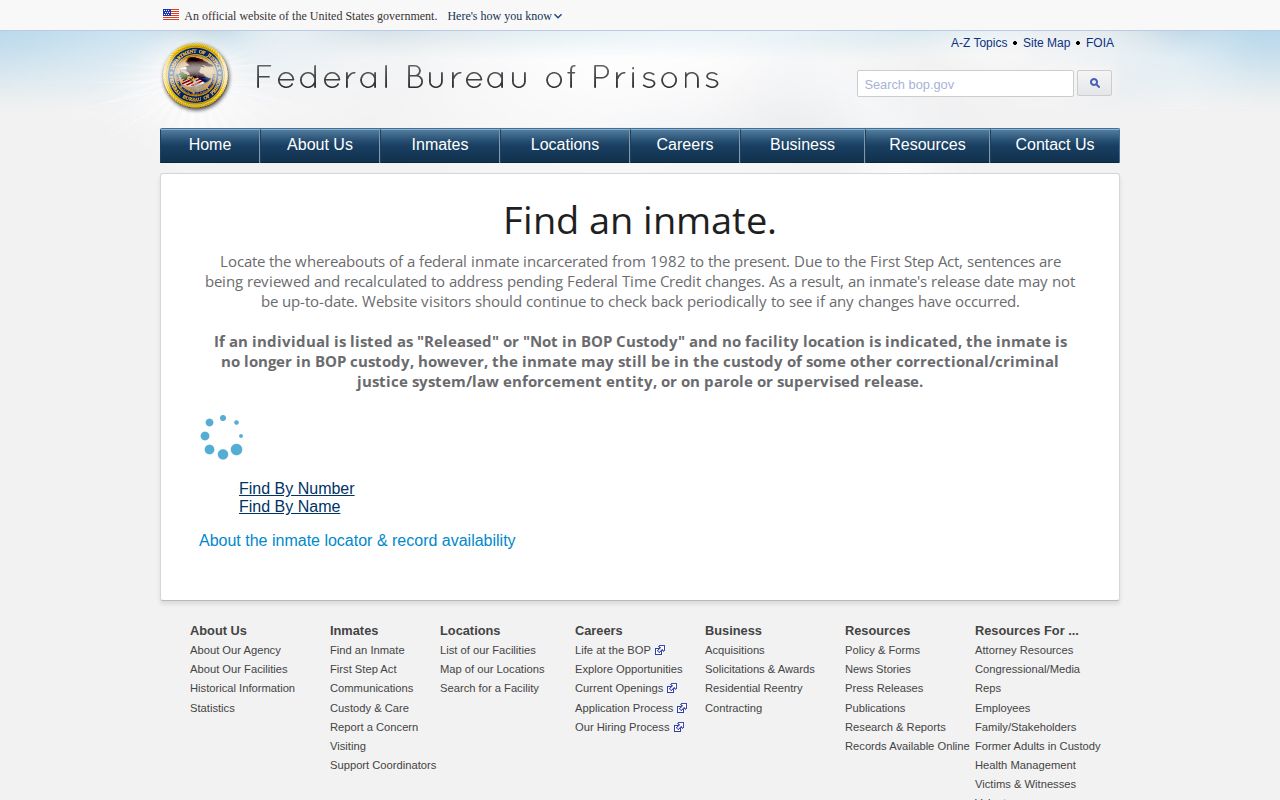
The result must be read as a BOP record, then checked against the federal docket and any later custody or supervision.
Note: BOP reports its own custody only; a Pennsylvania jail, state prison, immigration hold, or court supervision requires a separate check.
Lawrence BOP Release Records
A public BOP result shows a compact set of fields. Name and register number identify the federal record. Age, race, and sex help distinguish similar names. Location identifies current placement or the displayed custody outcome. The release date records the BOP event within the locator's terms.
| BOP field | Meaning |
|---|---|
| Name | The identity associated with the federal prison record. |
| Register number | The strongest public identifier for the BOP file. |
| Age, race, and sex | Matching fields that help avoid combining two people. |
| Release date | The recorded release from BOP custody, past or future as displayed. |
| Location | The BOP facility or released/not-in-custody status presented by the system. |
The BOP record explanation is essential when a result shows a past date and no current prison. It supports the limited statement that BOP custody ended on that date. It does not support the broader statement that the person was free from federal supervision or another jurisdiction.
Release calculations can change, including after lawful credit recalculation. A future BOP date should not be frozen as a promise. Confirm an actual release after the event and preserve the date of the lookup.
Lawrence USMS Release Records
The United States Marshals Service prisoner role covers custody from federal court commitment through acquittal, release, or delivery to BOP after conviction. USMS may use detention space owned by another government. That arrangement explains why a federal detainee's physical location and legal custodian may differ.
USMS provides no general public historical person search comparable to the BOP locator. The federal court docket is the fast public path for a detention or release order. The actual physical-custody record can reside in the USMS Prisoner Tracking System, which maintains processing and disposition data. A formal records request is slower and can be limited by privacy, security, or law-enforcement exemptions.
- USMS detainee
- A federal prisoner held under Marshal authority, often before trial.
- BOP inmate
- A sentenced federal prisoner committed to Bureau of Prisons custody.
- Contract space
- A bed used by USMS in another government's facility without changing the legal custodian.
- Supervised release
- A federal court term served in the community after prison, distinct from state parole.
A docket order may authorize release before staff complete processing or before another hold is resolved. Obtain the custodial disposition or discharge time when the physical exit matters.
Lawrence Federal Transfers Explained
A transfer from Lawrence County Corrections Center to USMS or BOP is continued custody. The county discharge entry may use release language because local custody ended. The destination agency resolves whether the person went home, entered federal detention, or began a federal sentence.
Likewise, USMS delivery to BOP is not a community release. It is the handoff from federal pretrial or sentencing custody to the federal prison system. Search BOP after the sentence and allow for processing. Use the court docket to connect the name and case to the commitment.
An immigration transfer is a different federal path. A BOP release can be followed by ICE custody, and a county departure to ICE is not BOP custody at all. Use the ICE locator only when the individual record supports immigration custody. Do not infer an ICE or federal contract for LCCC from the possibility of one person's detainer.
Note: The receiving agency and transfer timestamp distinguish release to the community from a handoff between county, federal, and immigration custody.
After a Lawrence Federal Release
A federal sentence can include supervised release after prison. That status comes from the federal judgment and is handled through the federal probation system assigned by the sentencing court. It is not Pennsylvania Parole Board supervision, PADOC parole, or Lawrence County Adult Probation.
Read the federal docket after the BOP release date. The judgment can state the term and conditions, while later filings can record modification or revocation action. BOP's released result does not summarize all of that court history. A later federal warrant or revocation can return the person to custody.
For an accurate statement, separate the events: released from BOP on the displayed date, then subject to any federal supervision shown by the court. Full completion requires the court and supervision record, not the absence of a current BOP institution.
Federal Release Contacts
No BOP institution or public USMS release counter was found in Lawrence County. The proper contact begins with the national agency tool and the federal court responsible for the case. A local street address would be misleading because the person may be housed anywhere in the federal system.
Federal Bureau of Prisons
National inmate and release locator
Search BOP custody and releases
Use the register number when known.
United States Marshals Service
Federal pretrial custody authority
Prisoner Tracking System description
No general public historical inmate locator.
The federal court docket supplies the release order, sentence, and supervised-release proceedings. For an old BOP record outside the locator's stated era, use the National Archives route described by BOP. For an individual USMS custody disposition, follow the agency's records process and expect case-specific limits.
Confirm a Lawrence Federal Release
Start by proving the federal custody layer. The Lawrence County jail's absence is not enough. Search the federal case for detention and sentencing orders, then use BOP for post-sentence prison custody. If the person was only a USMS pretrial detainee, the court order and Marshal custody disposition are the correct sources.
A BOP result with a past release date confirms the BOP event. Pair it with the federal docket for legal authority and any later supervision. If another agency appears in the chain, check that agency before describing community release. The Lawrence County released-inmate custody map helps separate local, state, federal, and immigration routes.
Keep the result narrow and dated. State that the person left BOP custody on a particular date according to BOP, or that USMS released the person under a named court order when the record supports it. Avoid a broad present-tense claim that can be defeated by a later arrest, detainer, or supervision action.